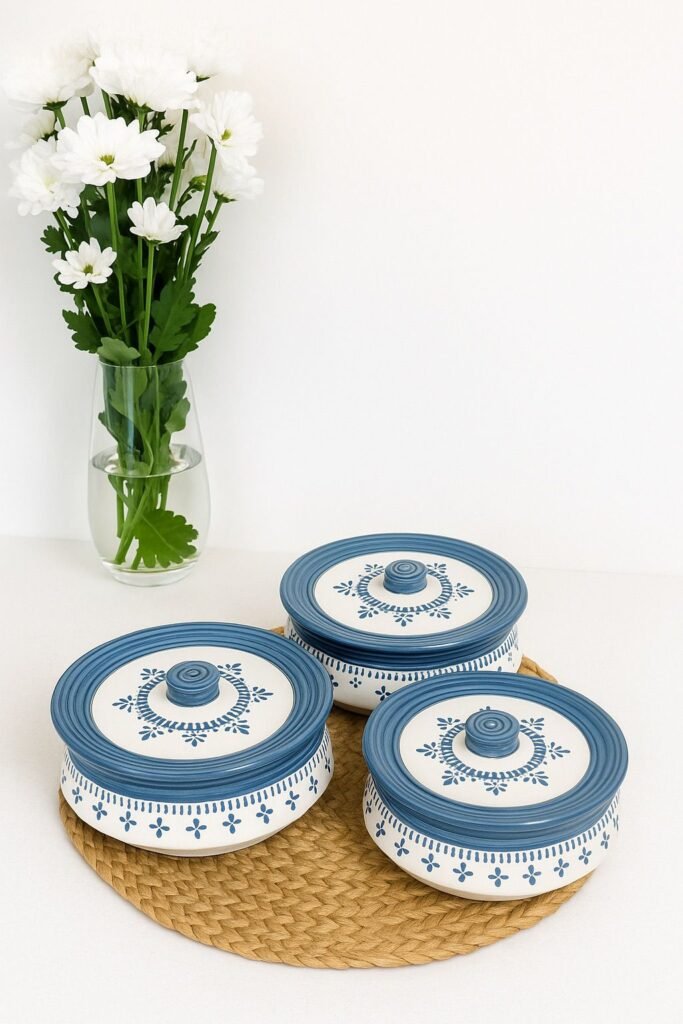
Tired of the sterile sameness of mass-produced décor? We get it. There's a profound, timeless quality in a truly handmade craft—a piece of pottery, a carved wooden piece, or a ceramic bowl that carries a soul. This journey begins not on an assembly line, but in the skilled hands of artisans across India, guardians of centuries of Indian craftsmanship, culture, and tradition.
Where Tradition Takes Root: India’s Craft Heartlands
India is a mosaic of craft clusters—villages where skill is an inheritance. In regions like Rajasthan, Haryana, Uttar Pradesh, and Gujarat, creating pottery, terracotta, woodwork, metalwork, and weaving isn't just a job; it’s a living legacy.
Here, generations watch their elders—no manuals, no machines, just instinct, patience, and the human touch. They preserve skills passed down for hundreds of years, shaping clay on a wheel or carving wood with basic tools.
Earth, Fire, and Soul: The Craft of Ceramics
The journey of handmade ceramics starts with raw clay from riverbeds, meticulously kneaded and shaped by hand on a potter’s wheel. These simple, elegant forms are then dried and fired in traditional kilns—often fueled by cow dung or wood—creating that distinctive natural finish and hardness.
The beautiful truth? No two pieces will ever be identical. Those slight variations in glaze, color, and form aren’t errors; they’re the proof of authenticity.
Nature’s Muse: The Beauty of Hand-Carved Woodwork
Travel to Saharanpur and other woodcraft regions of India, and you'll find artisans transforming mango, teak, or sheesham wood. They craft everything from furniture to home décor pieces, trays, candle stands, and frames.
Using tools as old as the trade itself—chisels, hammers, and hand-drawing instruments—every deliberate stroke tells a story. These designs are often inspired by Mughal architecture, flowers, leaves, or local folklore.

 Canada
 USA
USA Japan
Japan